

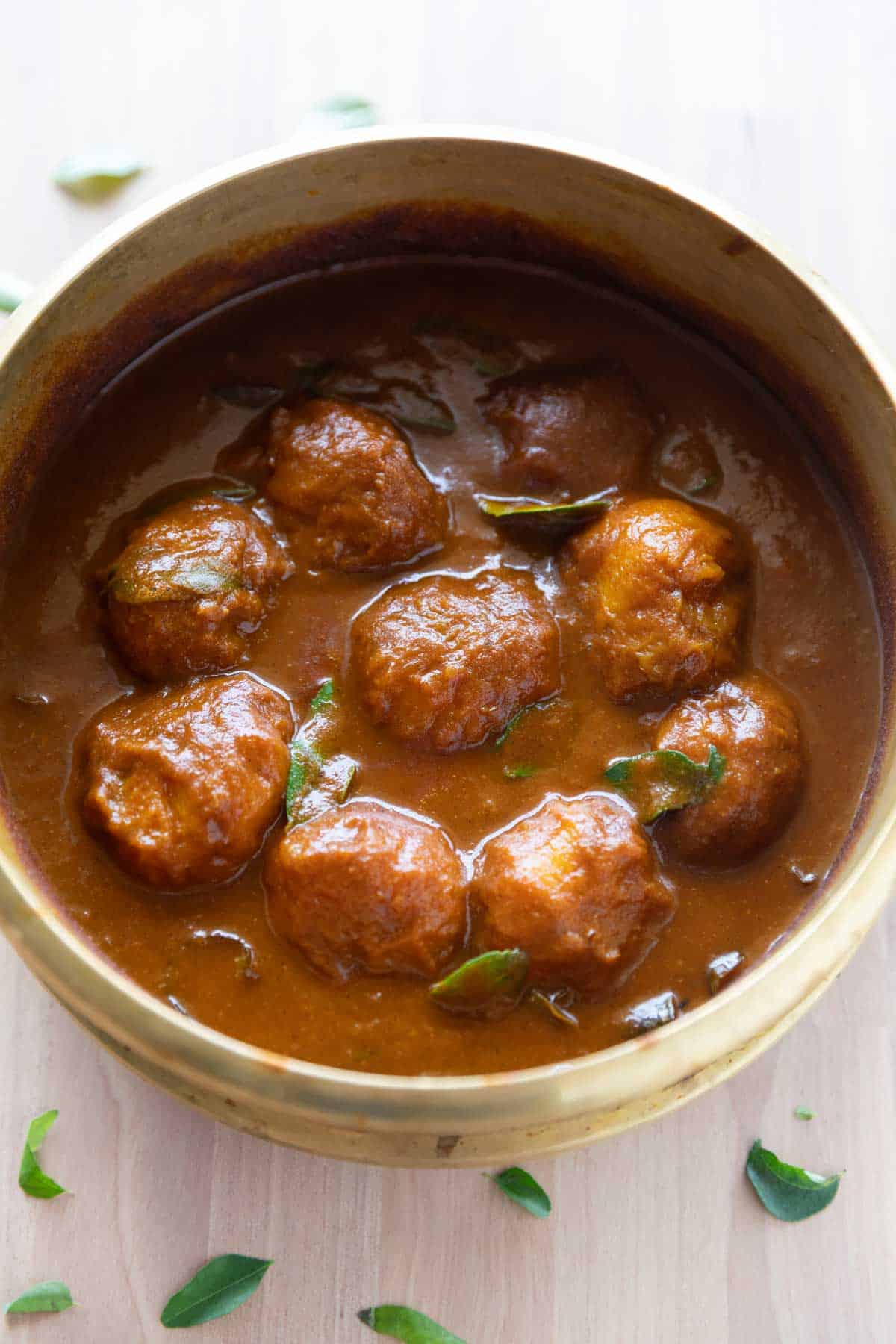
This ripe mango curry or ambe upkari is an unusual curry from the South Indian state of Mangalore. This dish has the perfect combination of sweet, savory, spicy flavors and is absolutely addictive!
It won’t be an exaggeration to say that I look forward to the first bite of this ripe mango curry all year long! This is one of those underrated recipes that has such a beautiful balance of flavors that it should be more popular. And I’m doing my part to change that hehe.
This Ripe Mango Curry is a Mangalorean style dish that is known for its freshly ground masalas as well as spicy and tangy flavors. And this ambe upkari is all that and more. The perfect combination of sweet, tangy, spicy and tangy flavors makes this mango curry so delicious and addictive. I think it tastes best with just a little steamed rice, but my family really likes it with neer dosa and coconut lutenica too. Let me tell you though, it doesn’t matter how you eat it, because either way you have to try it and it’s impossible to stop.
Go to Section: Mangalorean Ripe Mango Curry
Ingredients for Ripe Mango Curry
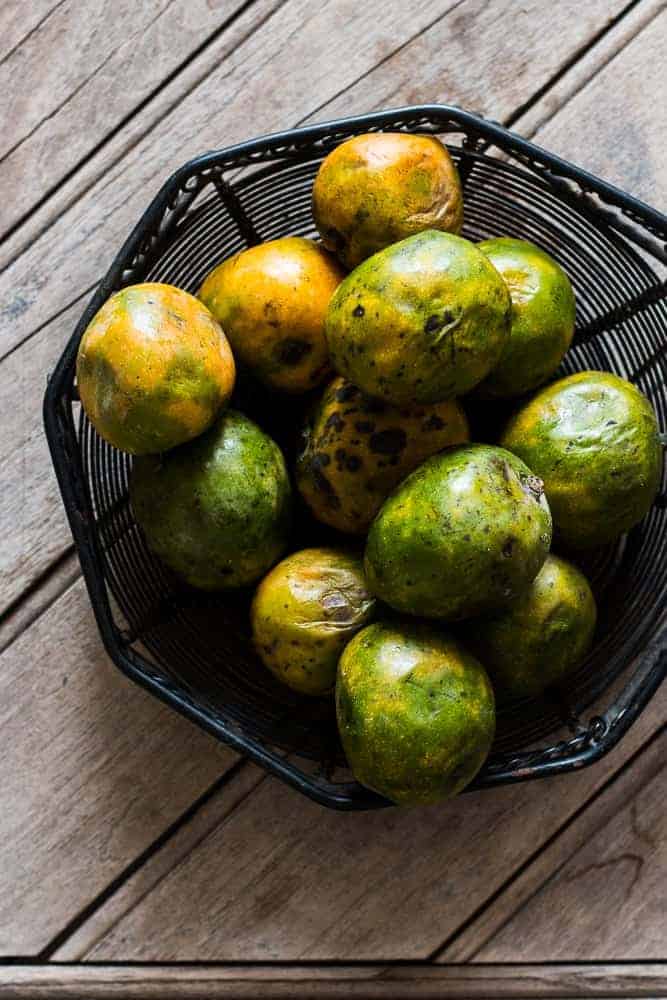
Mango: Traditionally, a South Indian variety called Ripe Sugar Baby Mango or Shakkargutti is used for this recipe. However, you can use any variety of sweet, fully ripe, pulp-free mango for this recipe.
Spices: Peppercorns, fenugreek seeds, mustard seeds, cumin seeds, coriander seeds and red chillies are dry roasted and then ground with aromatics to make a fresh, homemade masala for lots of flavor and aroma.
Aromatic substances: Onion, ginger and garlic are ground together with roasted spices to create a spicy, aromatic mixture that forms the aromatic base of this mango curry.
Curry leaves: For a fresh, herbal, earthy flavor that is authentic to most South Indian dishes.
Jaggery: To balance the spicy, tangy flavors in the curry. It can be substituted with a pinch of sugar, but I highly recommend using jaggery as it has a smokier, caramel flavor.
Oil: I have used coconut oil for its distinct aroma and authentic South Indian flavors. However, feel free to substitute a neutral flavored oil if you prefer.
Tamarind: It adds brightness and spiciness to the curry.
water: To adjust the consistency.
salt: For seasoning.
How to make Ripe Mango Curry
Peel the mango and set aside. Squeeze the skins off the mangoes and collect all the juice in another bowl.
In a pan, dry roast black peppercorns, fenugreek seeds, red chilies, mustard seeds and cumin seeds until a sweet, nutty aroma is released. This should take 3-4 minutes. Be careful to roast the spices on low heat so that the spices do not burn.
Grind together the roasted spices, garlic, ginger and onion with a little water until smooth.
Heat oil in a pan and add the curry leaves. Once they start spluttering, add the ground mixture along with the turmeric. Fry this paste for 8-10 minutes until you start seeing oil dripping on the sides.
Add the mango, juice from the peel, a cup of water, jaggery and salt. Bring this to the boil and simmer for 5-10 minutes until the sauce thickens slightly. Taste and add more tamarind or jaggery if required.
Add the mango, juice from the peel, a cup of water, jaggery and salt. Bring this to the boil and simmer for 5-10 minutes until the sauce thickens slightly. Taste and add more tamarind or jaggery if required.
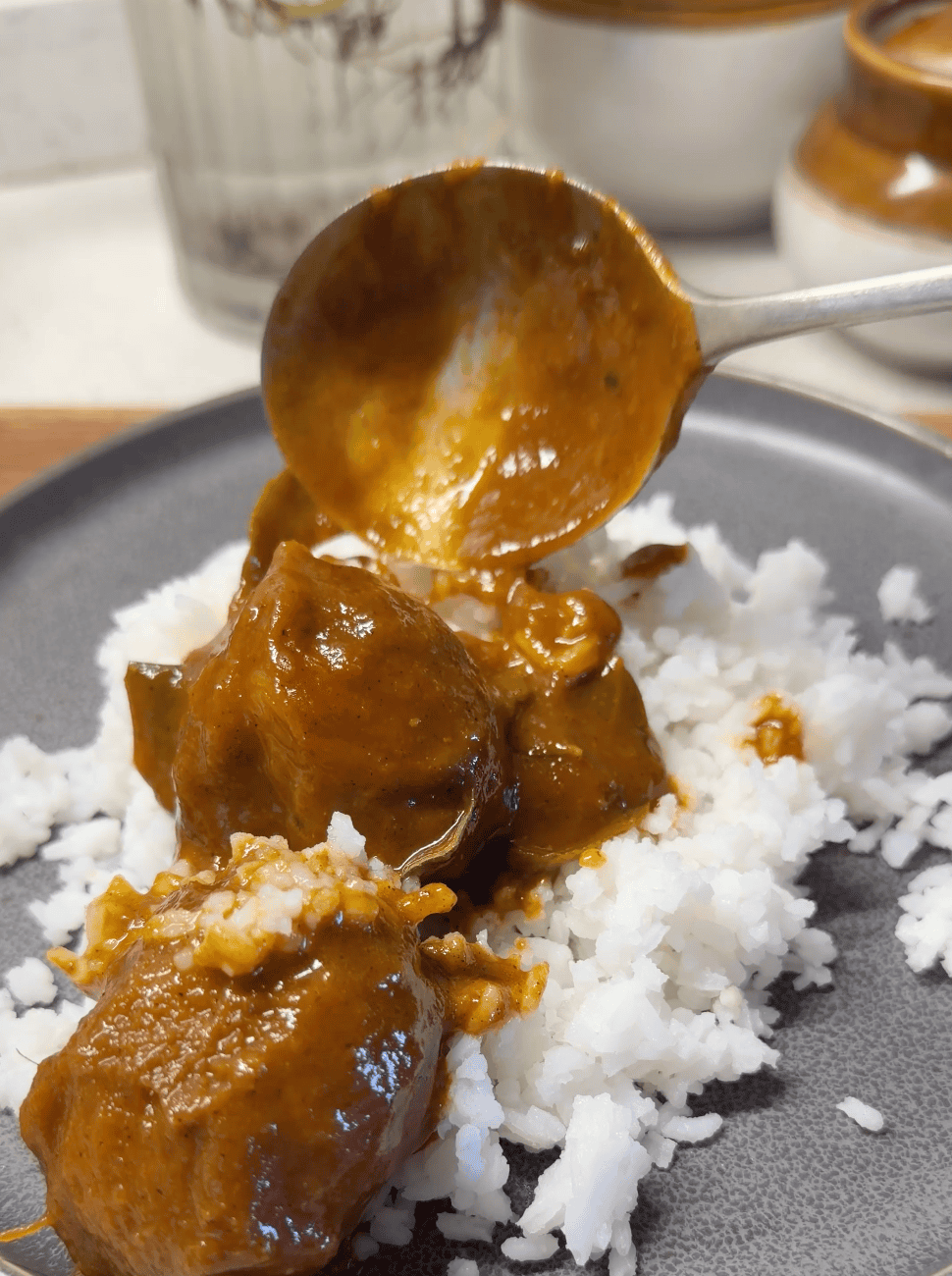
Serve hot with some steamed rice and a drizzle of ghee.
Frequently asked questions
It has a slight heat, but I wouldn’t exactly call it spicy. It has sweet, savory, spicy and tangy flavors that have a balanced taste. However, you can adjust the heat by increasing or decreasing the number of chilies and peppercorns you use according to your tolerance.
Jaggery helps to balance the spiciness of tamarind and mango. If your mango is very sweet, you can reduce the amount, but it is good not to omit it completely.
It may sound crazy, but I made this mango curry with pineapples and apples and both taste AMAZING in this curry! Please try it before you dismiss it.
Richa’s best tips
- Use ripe mango: Choose the ripest mangoes you can get, because that’s where the natural sweetness comes from
- Put on your apron and pull up your sleeves: You will need to peel the mango and squeeze all the juice out of the skins and seeds and things can get messy 😄
- Taste before adding ginger: Always do a taste test and balance the jaggery to match the tartness
- Be creative: Want to scale up the experiment? I have successfully made this curry using pineapples or even apples – these fruits work so well with the same recipe!
- Use fresh spices that are aromatic: For the best masala, make sure the spices are not more than a year old
- Go ahead: The flavor of this curry deepens overnight. So I would recommend making it a day ahead because the flavors really come together and taste phenomenal the next day!
Serving ideas
- Serve piping hot steamed rice and a spoonful of ghee for a traditional meal.
- Pairing with down dose for a relaxing coastal style lunch
- Enjoy with the soft rotissalad and dal for the most delicious summer lunch
Storage Tips
- Refrigerator: Store leftover ripe mango curry in an airtight container in the refrigerator until 3 days. As the curry sits, the flavors continue to develop, making leftovers especially delicious the next day.
- Reheat: Heat gently over low heat on the stove or in the microwave until warm. Avoid vigorous boiling, which can cause the mangoes to fall apart. If the curry thickens in the fridge, add a little water while reheating to loosen the consistency.
- Freezing: I would not recommend freezing this mango curry as freezing can change the texture of the mango which can become soft and mushy after thawing.
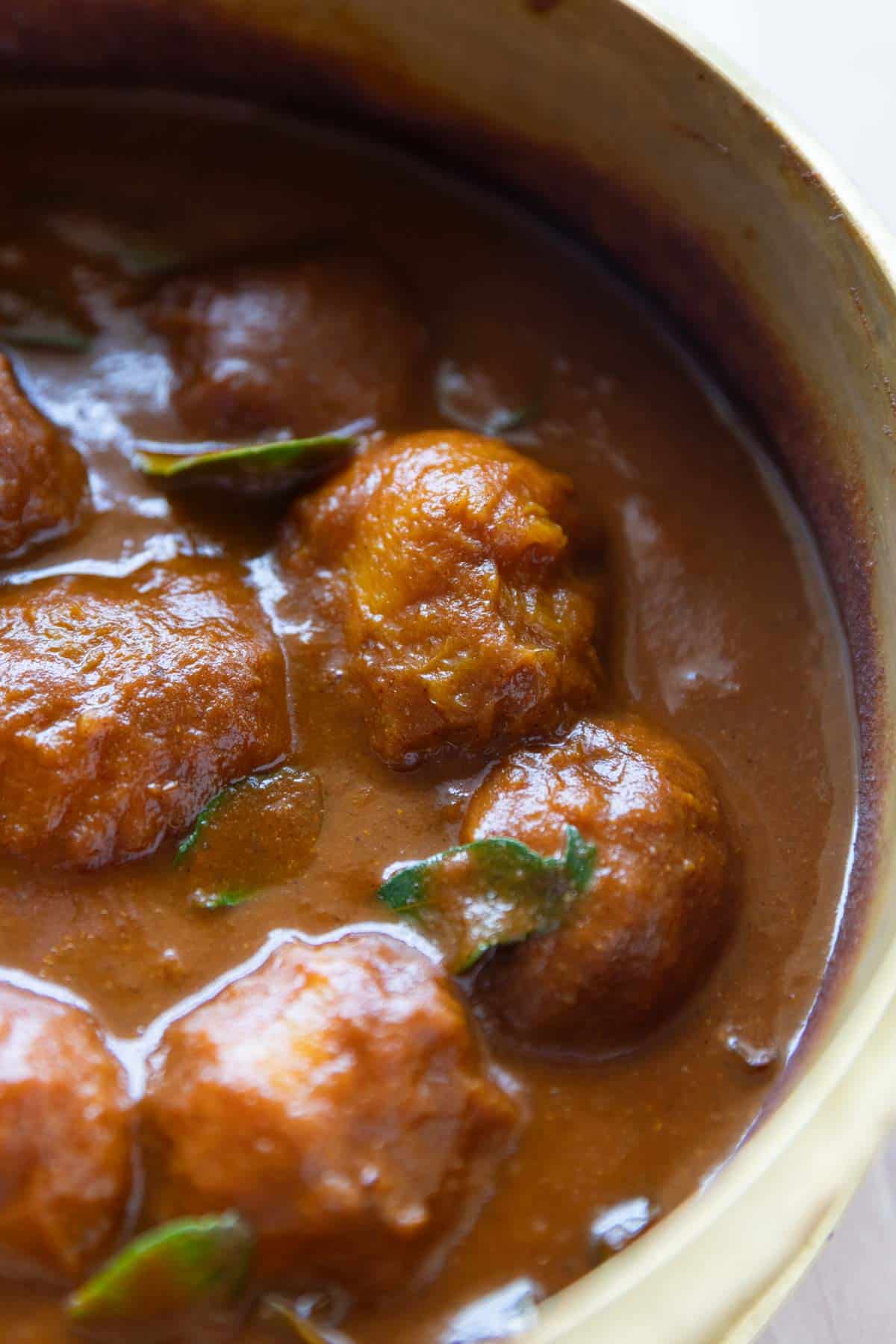
This Mangolearn ripe mango curry, also known as ambe upkari, is a beautiful celebration of the sweetest mango of the summer. With its perfect balance of sweet, savory and spicy flavors, this is the kind of traditional Mangalorean recipe that transforms a simple dish into something special. Serve it with steamed rice and ghee for a comforting dish that showcases the magic of ripe mango at its most delicious.
Watch Mangloreian Ripe Mango Curry Recipe Video
Prevent your screen from dimming
-
Peel the mango and set aside. Squeeze the skins off the mangoes and collect all the juice in another bowl.
-
In a pan, dry roast black peppercorns, fenugreek seeds, red chilies, mustard seeds and cumin seeds until a sweet, nutty aroma is released. This should take 3-4 minutes. Be careful to roast the spices on low heat so that the spices do not burn.
-
Grind together the roasted spices, garlic, ginger and onion with a little water until smooth.
-
Heat oil in a pan and add the curry leaves. Once they start spluttering, add the ground mixture along with the turmeric. Fry this paste for 8-10 minutes until you start seeing oil dripping on the sides.
-
Add the mango, juice from the peel, a cup of water, jaggery and salt. Bring this to the boil and simmer for 5-10 minutes until the sauce thickens slightly. Taste and add more tamarind or jaggery if required.
-
Serve hot with some steamed rice and a drizzle of ghee.
- This curry is made with a tiny mango called sugar mango (Shakargutti). Use ripe sweet mangoes for this recipe.
- This Mangalorean ripe mango curry gets a flavor kick from the mix of roasted spices and onions, ginger and garlic. Dry roasting releases the aromas of the spices and you will feel a sweet, nutty aroma wafting through your kitchen. Grind them together into a smooth paste.
- If you plan to enjoy this ripe mango curry, make it and keep it aside for a day. The flavors really come together and the taste is phenomenal next day!
- Don’t miss the tamarind as this balances the flavors of the curry. You can make tamarind paste at home or buy packaged tamarind paste.
Calories: 486kcal, Carbohydrates: 110g, Protein: 7g, fats: 8g, Saturated fats: 1g, sodium: 16mg, potassium: 1269mg, Fibers: 12g, sugar: 96g, Vitamin A: 7076IU, Vitamin C: 284mg, calcium: 97mg, Iron: 2mg
This article was researched and written by Urvi Dalal.
